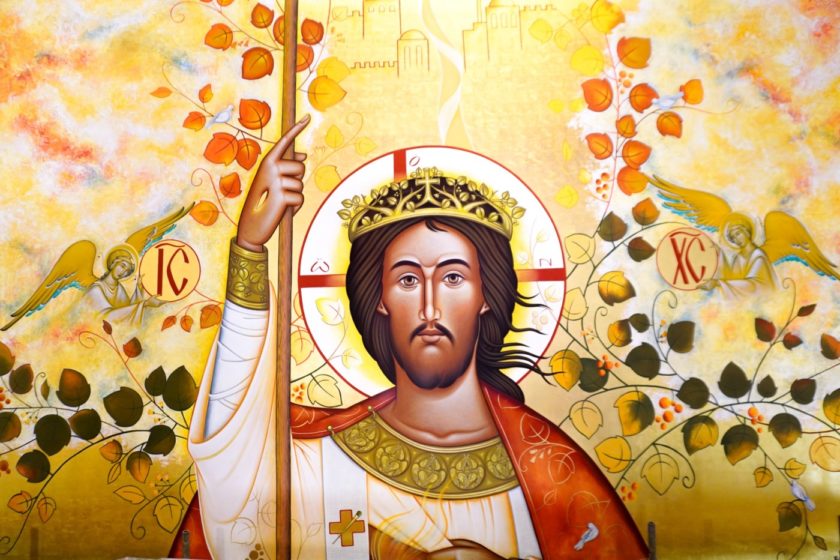
Easter is the feast of feasts, the center of our faith. As we meditate on the Gospel of John (Jn 20:1–9), we are invited to run with the disciples toward the empty tomb. The Resurrection of Jesus is not only, as we believe, a historical fact, but the definitive victory of Life over death, of Light over darkness. On Easter morning, physical “seeing” is transformed into the “believing” of the heart, opening a new horizon of hope for humanity.
To help you pray with this Gospel, we present the five central points of our reflection based on the podcast
Mary Magdalene: The Apostle to the Apostles
Mary Magdalene is the first to arrive at the tomb “…very early in the morning, while it was still dark” (Jn 20:1). That darkness was more than the absence of sunlight; it was a night in the soul of one who, not yet understanding the Resurrection, was seeking a corpse to venerate instead of the Living Lord. Yet, in her “pilgrimage” of love, she notices the absence of the body and runs to Peter and the beloved disciple. She teaches us that even when we are groping in faith or living through “dawns” of pain, we must continue seeking the Lord with perseverance. Later, her remaining and weeping (cf. Jn 20:11–18) will be rewarded with the appearance of Jesus, who will send her to the apostles, and for this reason she is called the Apostle to the Apostles.
Simon Peter: The Testimony that Confirms the Church
Upon hearing Magdalene’s report, Peter runs to the tomb. Although the “beloved disciple” arrives first, he waits for Peter, respecting his primacy and authority. Peter enters the tomb and observes the details: the linen cloths lying on the ground and the cloth that had covered Jesus’ head, rolled up in a place by itself. The figure of Peter represents the Magisterium of the Church, the one who gives the final word and confirms the brethren in faith, ensuring that the testimony of the Resurrection is faithful and ordered.
The Beloved Disciple: The Identity of One Who Is Loved
The text refers to the “disciple whom Jesus loved” or the “other disciple” (Jn 20:2–3, 8). More than a personal identification of the author of the Fourth Gospel, this title is an invitation for each of us: to feel ourselves also as “beloved disciples” who run enthusiastically to meet Jesus. His faith (“He saw and believed” (Jn 20:8)) is born from intimacy with the Master; he does not need an immediate physical apparition, for the sight of the signs in the tomb is enough for his heart to recognize the Lord’s victory.
The Signs in the Tomb: The Linen Cloths and the Sudarium
The detailed description of the linen cloths lying on the ground and the cloth (sudarium, in Greek) that had been on Jesus’ head, rolled up separately (which means: I will return!) is a fundamental sign. If the body had been stolen, the thieves would not have taken the care to untie the cloths or fold the sudarium and place it aside. This arrangement in the empty tomb points to a divine and ordered event: Jesus did not return to life like Lazarus (who came out still wrapped in the cloths and needed to be untied), but rose to a new life, leaving behind the signs of those folded cloths. The striking image of the Shroud of Turin has challenged scientists for centuries.
The Understanding of the Scriptures
The Gospel ends by noting that, until that moment, they had not understood the Scripture that said Jesus had to rise from the dead. The fulfillment of the Word of God is the true foundation of our hope, raising the empty tomb to a monument of definitive victory. The light of the Resurrection illuminates everything that was said both in the Old Testament (cf., e.g., Ps 15(16):9–10; Hos 6:2) and by Jesus Himself, and later by the apostles who bore witness (gave their lives for the faith). We are invited to move from a faith based on “seeing” sensible signs to a mature faith, grounded in listening and in a deep understanding of the Word.
Steps of Lectio Divina
Reading (lectio): Read John 20:1–9 attentively. Accompany Mary Magdalene, very early in the morning, to the tomb. Try to visualize the running of Peter and John, the silence of the tomb, and the arrangement of the linen cloths and the sudarium rolled up separately.
Meditation (meditatio): With which character do you most identify today? With Magdalene’s persistent search, with Peter’s authority, or with the intuitive faith of the Beloved Disciple? What in your life still seems “dark” and needs the light of the Lord’s Resurrection?
Prayer (oratio): Pray with joy: “Lord Jesus, Conqueror of death, I adore You on this morning of light! Remove the stones that close my heart and grant me the grace to ‘see and believe’ in Your constant presence. May the joy of the Resurrection renew my hope…” (continue as the Holy Spirit inspires you).
Contemplation (contemplatio): Remain in silence before the empty tomb. Feel the relief of knowing that death does not have the last word. Adore the Risen Christ who fills the whole universe with His glory.
Action (actio): Easter is mission. Identify someone who lives in sadness or discouragement and bring that person a word of hope and the joyful proclamation: “The Lord is risen, alleluia! Yes, truly He is risen! Alleluia!”
May the joy of the Risen Lord remain with you throughout this week.