José Ricardo F. Bezerra
Introduction
On the Fourth Sunday of Advent, the Church places us before the mystery of the origin of Jesus according to the Gospel of Saint Matthew, Matthew 1:18–24. We are already at the threshold of Christmas, and the Word leads us to the heart of the events that culminated in the Incarnation of the Son of God. This unfolds in silence, in obedience, and in the faith of concrete people.
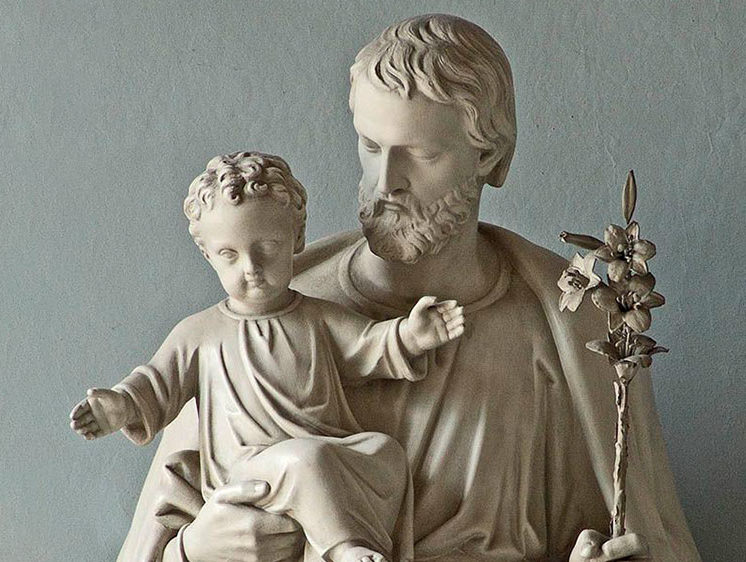
In this Gospel, the central figure is Saint Joseph. He does not speak, he does not question, he does not argue. He listens, he trusts, and he acts. Around him revolve Mary, the Holy Spirit, Jesus, and the ancient promise that is fulfilled. This text is meant to help us pray and prepare to welcome the Lord when not everything is clear, but everything calls for fidelity.
Below, we propose seven points, which we reflected on in the podcast of the channel @Felizes os que ouvem (https://www.youtube.com/watch?v=MCLtE58mKXU), for your personal prayer, lectio, with this Gospel.
- The origin of Jesus
The text begins by stating, “The origin of Jesus Christ was as follows” (Mt 1:18). Matthew wants to introduce the reader to the mystery of the Incarnation through concrete people. Jesus has a divine conception that surpasses human understanding and is therefore wrapped in mystery. He will be born by God’s initiative, through the power of the Holy Spirit. At the same time, the evangelist shows that this origin is set within a genealogy, within a people, within a human family. Contemplating the origins of Christ also leads us to remember our own origin. Even before being born, we were already loved and thought of by God, to be His adopted children through Jesus (cf. Eph 1:3–6). Advent is a favorable time to reclaim this awareness. - Mary, the mother
Mary appears discreetly in Matthew’s account, yet she occupies a special, unique, and decisive place. She is betrothed to Joseph and conceives by the action of the Holy Spirit. Mary’s motherhood springs from a total surrender to the will of God, already lived in her earlier “yes.” Even though she does not utter a single word in this Gospel, Mary is a model of silent faith, of absolute trust, and of openness to God’s designs. Her presence reminds us that the Lord accomplishes great things in those who open themselves to His action, even when there are risks and misunderstandings. - Joseph, the righteous man
Joseph is presented as “righteous” (tzaddik). In the Bible, justice and holiness are equivalent. The righteous person is the one who lives in conformity with God’s will. Faced with a situation he does not understand, Joseph does not react with harshness or judgment. He seeks to act with integrity and mercy.
Joseph’s inner drama reveals a mature faith, capable of bearing the weight of a decision without exposing the other. His righteousness is expressed in his care for Mary and in his willingness to take the consequences upon himself. It is in this context that God intervenes and invites him to take a greater step, to welcome the mystery.
- The action of the Holy Spirit
Twice the Gospel affirms that the conception of Jesus happened through the “action of the Holy Spirit” (Mt 1:18, 20). What surpasses human understanding has its origin in God. The Holy Spirit acts discreetly, yet decisively. He is the silent protagonist of the Incarnation. Even today, the Spirit continues to act in the life of the Church and in the history of each believer. To pray with this point is to ask for the grace to recognize the action of God’s Spirit even when it does not impose itself with obvious signs. - The name of Jesus
The angel entrusts Joseph with a concrete mission, to give the child his name, “You shall name him Jesus” (Mt 1:21b). By accepting this task, Joseph legally assumes the paternity of Jesus, inserts him into the history of the people of Israel, and makes him son of David, son of Abraham (cf. Mt 1:1). The name Jesus, Yeshua, means “God saves.” The mission of the Son is clear, “He will save his people from their sins” (Mt 1:21). This salvation does not present itself as a political project or a human triumph, but as interior liberation, reconciliation, and new life. On the threshold of Christmas, we are invited to welcome Jesus as He comes, Savior. - The promise fulfilled
Matthew is careful to show that everything happens in order to fulfill what the Lord had announced through the prophet, “Behold, the virgin shall conceive and bear a son…” (Mt 1:23; cf. Is 7:14). Advent is the time when the Church contemplates God’s fidelity to His promises. What was written centuries earlier is fulfilled in an unexpected, yet true, way. The Word of God does not fail. Meditating on this point strengthens trust and renews hope, even when the time of waiting seems long. - The obedience of Joseph
The Gospel ends with a simple and decisive gesture. Upon waking, Joseph does as the angel had commanded him. He takes Mary into his home and assumes his mission (cf. Mt 1:24). Joseph’s obedience does not arise from full understanding of the mystery, but from trust in God. He walks in faith, sustained by the Word he has received. In this final gesture, Joseph teaches us that the true response to God’s call is given in practice, in daily life, in concrete choices.
Practical conclusion
On the threshold of the celebration of Christmas, the Gospel invites us to learn from Saint Joseph. Faced with the mystery, he neither closes himself off nor walks away. He welcomes, he trusts, and he moves forward.
May this final stretch of the Advent season find us watchful, available, and open to the action of God. Even when we do not understand everything, we can choose obedience. In this way, the Lord finds space to be born also in our hearts.
Steps of Lectio Divina
- Reading, lectio
Read Matthew 1:18–24 attentively. Observe the characters, the actions, and the verbs that structure the text. - Meditation, meditatio
Ask yourself, where am I called to trust God more? What fears do I need to surrender? What does it mean to welcome Jesus today? - Prayer, oratio
Speak with the Lord from what touched your heart. Ask for the grace of obedient faith and interior silence. - Contemplation, contemplatio
Remain in silence before God. Let the Word generate peace and trust. - Action, actio
Take on a concrete gesture of obedience or service in these days, preparing the heart for Christmas.
Shalom!
See you next week!
https://www.youtube.com/watch?v=MCLtE58mKXU