José Ricardo F. Bezerra
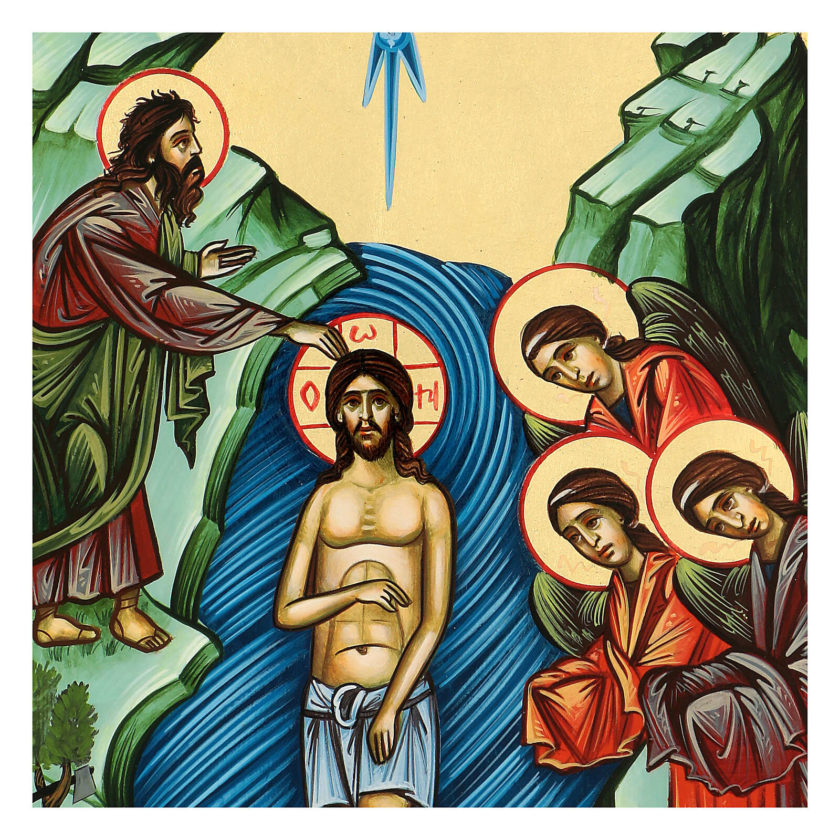
The Feast of the Baptism of the Lord concludes the Christmas season and inaugurates Ordinary Time. It is a decisive transition in the liturgical year because it marks the moment when Jesus leaves the hidden life of Nazareth and publicly manifests himself as the beloved Son of the Father. The Jordan River thus becomes a place of passage: from ordinary life to mission, from silence to the proclaimed Word, from recollection to surrender.
Matthew’s Gospel for this Sunday is brief but dense. In just a few verses, we are introduced to the mystery of the Trinitarian manifestation and the profound meaning of the Baptism that inaugurates Jesus’ public life. To meditate on this Gospel, we propose five points that help to delve deeper into this mystery, based on the podcast ( https://www.youtube.com/watch?v=NAwjabyHxd4 ), with subtitles in several languages according to your choice.
- From Galilee to the Jordan
Jesus leaves Galilee and goes to the Jordan River to meet John. This journey is not merely geographical. It expresses an inner decision, a moment of transition. For years, Jesus lived an ordinary life, submissive, working, sharing the routine of Nazareth. Now, the time has come to leave this hidden life and begin a new path.
The Jordan River, in the history of Israel, is always a place of crossing. It was there that the people entered the Promised Land (cf. Josh 3:1-17). It was also there that Elijah left Elisha as his successor and was taken up to heaven (cf. 2 Kings 2:1-18). It is there that Jesus begins his mission. The departure from Galilee indicates that daily faithfulness prepares for great beginnings. Nothing is born from improvisation. Jesus’ public life springs from a long, silent obedience.
In our lives, too, there are these transitional moments. There are times when we are called to remain, and times when we are called to depart. Discerning these moments is part of listening to God’s will. The Baptism of the Lord invites us to remember the milestones of our own journey and to recognize when God calls us to make decisions and cross new thresholds.
- Baptism and righteousness
John is surprised to see Jesus approaching to be baptized. John’s baptism was a baptism for the conversion of sinners (cf. Mt 3:6), and Jesus was without sin (cf. Jn 8:46). John’s resistance is understandable (cf. Mt 3:14). Even so, Jesus insists: it is necessary to fulfill all righteousness (cf. Mt 3:15). This righteousness is not a mere outward observance. It is about full adherence to the Father’s Will.
By accepting John’s baptism , Jesus shows solidarity with sinners and fully embraces the human condition. He descends into the waters not to be purified, but to sanctify them. That baptism was a sign of another that he would later announce (cf. Mk 10:38; Lk 12:50). He places himself in the position of those he came to save. In Jesus’ gesture, baptism reveals its deepest meaning: death and life, descent and elevation. By immersing himself in the waters, Jesus anticipates the total gift of himself on the cross. By emerging from them, he points to the new life that will be offered to all. Our own Baptism participates in this mystery, making us die to sin and live for God.
- The Spirit of God
After the baptism, the Spirit descends upon Jesus like a dove (cf. Mt 3:16). This is not a definition of the Spirit, but a visible sign of his presence and action. The Spirit who hovered over the waters at creation now rests upon the Son.
The Spirit does not speak, but confirms. He does not impose himself with noise, but remains. His presence reveals that Jesus’ mission does not originate from a personal initiative, but from God’s anointing. It is the Spirit who sustains, guides, and confirms the Son’s path.
In the Christian life, too, the Spirit acts in a discreet and profound way. He illuminates, strengthens, reminds, and guides, even when we don’t immediately perceive it. Recognizing his presence requires inner attention and persevering faithfulness.
- The voice of heaven
After being baptized, the heavens open and the Father’s voice is heard (cf. Mt 3:17a). It is not merely a statement addressed to Jesus, but a testimony offered to those present. The Father reveals who Jesus is and publicly manifests his identity.
This voice does not add anything new to the person of Jesus, but reveals what He has always been. At the same time, it inaugurates a new way of relating between God and humanity. The Father speaks, the Son is revealed, the Spirit is present. The Trinity manifests itself at the beginning of Jesus’ mission.
God continues to speak to the human heart, not always with audible words, but with an inner clarity that guides and sustains. Learning to recognize this voice is part of the path of faith.
- The Beloved Son
“ This is my beloved Son, in whom I am well pleased .” (Mt 3:17b). The Father’s final word reveals the heart of the whole mystery. Jesus is the Son, and his mission springs from this loving relationship.
In baptism, this sonship is proclaimed. In our Baptism, we are incorporated into it. We become children in the Son. Not by merit, but by grace. This awareness transforms the way we live, pray, and act. The Christian mission is not born from isolated effort, but from the certainty of being loved by God.
Feeling loved doesn’t eliminate the difficulties along the way, but it gives them meaning. Faith matures when this truth ceases to be merely known and begins to be embraced in the heart.
To pray with the Word (Lectio Divina)
Reading ( lectio ) : Read Matthew 3:13-17 slowly. Observe the gestures, the words, and the silences.
Meditation ( meditatio ) : What most draws your attention in this Gospel? What passage, gesture, or word touches your life today?
Prayer ( oratio ) : Present to the Lord your journey, your transitional moments, your resistances, and your desires for faithfulness.
Contemplation ( contemplatio ) : Remain silent before God. Let the words resonate in your heart: ” You are my beloved son .”
Action ( actio ) : How can you live out the grace of your Baptism more consciously and faithfully this week? If you don’t know, look up the day you were baptized.
See you next week!
Shalom!
Click below and select the subtitles in your language.