By José Ricardo Bezerra and Felipe Bezerra
“On the last day, the great day of the feast, Jesus stood up and exclaimed: ‘If anyone is thirsty, let him come to me, and let the one who believes in me drink. As Scripture says: from his heart shall flow rivers of living water.’ He was speaking of the Spirit which those who believed in him were to receive; for there was no Spirit yet, because Jesus had not yet been glorified.” (Jn 7:37-39)
Introduction
Today we celebrate the Solemnity of Pentecost, the close of the fifty days of Eastertide. In this Year A, we have chosen to meditate not on the Gospel of the day (Jn 20:19-23), which we already meditated on at the Sunday of Divine Mercy, but rather on the Gospel of the Vigil of Pentecost, the one proclaimed at the Saturday evening Mass: John 7:37-39.
Only three verses, yet they hold an immense richness. Jesus is in Jerusalem for the Feast of Tabernacles (Sukkot), one of the three great annual pilgrimages of the Jews, together with Passover and Pentecost. It was a solemn feast that celebrated the harvest at the end of autumn and recalled the journey through the wilderness, when the people slept in tents. To this day many Jews keep the custom of setting up tents on their balconies during those days.
A liturgical detail of this feast sheds light on today’s Gospel: there was a libation of water. The priests would go down to the pool of Siloam, fill jars and go up with the people in a festive procession, singing “Hosanna” and “Alleluia” up to the Temple, where they would pour the water on the altar. A popular saying went: “Whoever has not seen the joy of the Feast of the water-drawing has not seen what true joy is”. And, according to some traditions, on the last and most solemn day of the feast, the priests did not bring the water, recalling the thirst suffered in the wilderness. It is precisely on this day that Jesus stands up and cries out: “If anyone is thirsty, let him come to me, and drink” (Jn 7:37).
Below we share five points from today’s Gospel for you to meditate and pray with.
1. “The last day of the feast“
Jesus chooses to reveal himself on the most solemn day, at the climax of the Feast of Tabernacles. This feast was a memorial of the pilgrimage in the wilderness (when they lived in tents) and a thanksgiving for the harvest of that year. A rabbinic tradition holds that the rock that Moses struck and from which water flowed to quench the people’s thirst (cf. Ex 17:1-7) accompanied them in the wilderness, and that this same rock came to rest within the pool of Siloam, which received the waters of the Gihon spring. A prophecy of Ezekiel announced that from the right side of the Temple a spring would flow out which would become a mighty river, giving life to everything it touched (cf. Ez 47:1-12).
For us Christians, every Sunday is a day of feast, for it is the Lord’s Day: “This is the day the Lord has made; let us rejoice and be glad in it” (Ps 118(117):24). Pentecost is, par excellence, a solemn day of feast, the eighth Sunday, the conclusion of Eastertide, the day in which three feasts converge: Passover, Pentecost, and, in the background, the Feast of Tabernacles.
2. “If anyone is thirsty, let him come to me and drink“
Jesus’ invitation carries a condition that may surprise us: “If anyone is thirsty…“. It is not that the Lord wishes to restrict his gift: it is that without thirst no one looks for water to drink. Whoever judges himself satisfied, whoever is proud, whoever thinks he has no need, does not receive it. To acknowledge oneself thirsty is to have the humility of the poor, the needy, the beggar. The Lord never forces us. “Behold, I stand at the door and knock; if anyone hears my voice and opens the door, I will come in to him and dine with him, and he with me” (Rev 3:20).
Here Psalm 42(41):2 resounds: “As the deer longs for streams of water, so my soul longs for you, O God”. And Isaiah’s appeal in 55:1: “Ho! All who are thirsty, come to the water; you who have no money, come, buy and eat; come, buy wine and milk without money and without price”. Jesus clearly identifies himself as the source of living water of which Isaiah spoke: “For I will pour water on the thirsty land, and streams on the dry ground; I will pour my Spirit upon your offspring, and my blessing on your descendants” (Is 44:3).
3. The faith that receives: “The one who believes in me“
The verb that opens the gift of faith is to believe: “The one who believes in me, as Scripture says, rivers of living water will flow from within him” (Jn 7:38). Faith is the door through which the Spirit enters.
But how to take the step of faith if it is small? The disciples themselves had less faith than a mustard seed (cf. Mt 17:20). The size does not matter, taking the step matters. However, Christian faith is not blind, irrational; it is an enlightened faith, that goes beyond reason without denying it. Jesus presents to us several witnesses so that we may believe in him: John the Baptist, the works he performed, the Scriptures, the Father, and His Word (cf. Jn 5:21-39). He will say to Thomas, who asked to touch his wounds as a condition for believing: “Blessed are those who have not seen and have believed” (Jn 20:29). We are those blessed ones, who do not see Jesus physically, yet believe in his Word and in the testimony of those who came before us. This faith feeds itself, takes steps, and in those steps receives God’s response.
4. “Jesus was speaking of the Spirit“: the Spirit is the living water
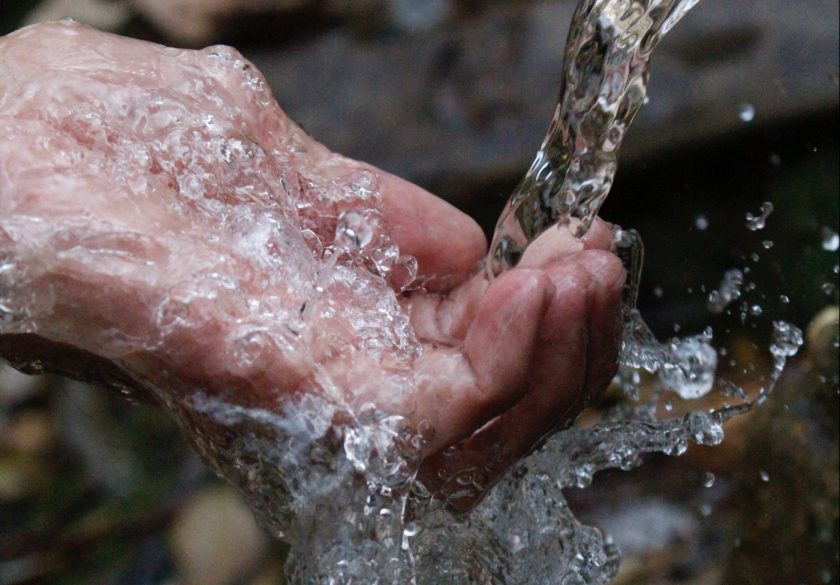
And what would these “rivers of living water” be? The evangelist himself gives us the key to understand: “Jesus was speaking of the Spirit” (Jn 7:39). This living water, bubbling and abundant like a river, is the Holy Spirit. We immediately recall the same promise of living water made by Jesus to the Samaritan woman (cf. Jn 4:10): the water that satisfies our thirst forever. We recall the prophecies of Ezekiel: the river flowing from the right side of the Temple (Ez 47:1-12) and the dry bones that receive the breath of the Spirit and come back to life (cf. Ez 37:1-14).
This Spirit flows from the heart of Jesus, since it is from his side opened on the cross that blood and water flow (cf. Jn 19:31-35). The Spirit is given by the Risen One who breathes on the disciples on the Paschal morning: “Receive the Holy Spirit” (Jn 20:22), called the Johannine Pentecost. It is the same Spirit who came at Pentecost (cf. Acts 2:1-13) with the sound of a mighty rushing wind and with tongues of fire, giving parrhesia, the missionary impulse with all boldness, and the love poured into our hearts (cf. Rom 5:5). It is all the same Spirit, the same living water. It is also the water of Baptism, of the Sacrament of Reconciliation (“those whose sins you forgive are forgiven”, Jn 20:23) and of Confirmation or Chrism.
5. “Those who believed in him were to receive“
This announcement of the Spirit that Jesus makes in the midst of his public life anticipates what will be fully accomplished at Easter and Pentecost; it says that the disciples “were to receive…” (Jn 7:39). It was a promise that reaches every Christian to this day.
All the baptized receive the Holy Spirit. But, in many, this gift remains dormant. Many do not use the infused gifts (cf. Is 11:2), nor the charismatic gifts (cf. 1Cor 12:1-16) that the Lord has entrusted to us. Pentecost is the opportunity to ask for a new outpouring: that the Spirit may revive in us what we already received in Baptism, that He may give us understanding of Jesus’ words and works, that He may lead every small step of our life according to the heart of God.
Steps of Lectio Divina
Reading
Take your Bible and read, with attention and without rushing, John 7:37-39. Read it again, half-aloud or aloud, if possible. Underline the verbs: cried out, comes, drink, believes, will flow, were to receive. Note the key words: feast, thirst, living water, Spirit, faith. Place the scene: we are on the last day of the Feast of Tabernacles (cf. Jn 7:2), in Jerusalem, with Jesus standing, in a loud voice giving his invitation.
Meditation
Ask yourself: what thirst is there in me today? What, truly, am I thirsty for? Do I acknowledge my poverty before God, or do I go around satisfied with myself? In what areas of my life is the Holy Spirit dormant? What step of faith is the Lord asking of me now, even if my faith is as small as a mustard seed? Let the Holy Spirit show you a word, an image, a sentence from the Gospel that touches your heart today.
Prayer
Respond to the Lord in your own words. Tell him about your thirst, ask him to send the Holy Spirit upon you, and the gift of faith. Use Psalm 42(41) (“as the deer longs for streams of water…”), the Pentecost sequence (“Come, Holy Spirit…”), or Jesus’ own invitation, and say to him: “Lord, I am thirsty; I come to you and want to drink”.
Contemplation
Stay in silence before the Lord. You need not say anything, nor think much. Simply remain. Let the Spirit, who is the living water, fill your heart. Like the man born blind who washed in the pool of Siloam (which means “Sent“, cf. Jn 9:6-7), let yourself be washed, healed, and enlightened.
Action
What concrete fruit is the Lord asking of me this week? A gesture of faith? A reconciliation? A yes to an impulse of the Spirit that I have been postponing? Choose one action, however small, and carry it with you throughout the days.
Closing prayer
Lord, as Ezekiel we ask: send, O Lord, your Spirit from the four corners of heaven. Come, Holy Spirit, who are God with the Father and the Son, come upon us and grant us the grace to acknowledge and take seriously our spiritual life. Lead our steps in every small detail of our life. Come, Holy Spirit, and fill the hearts of your faithful. Come, Father of the poor; come, Giver of so many gifts; come, Consoler of the afflicted. Fill our hearts with the living water who is you yourself.
O Mary, Spouse of the Holy Spirit, intercede for us, that we too may be filled with the Holy Spirit and conceive Jesus in our hearts. Guide our steps, lead us by the hand.
Hail Mary, full of grace… Queen of peace, give us peace! In the name of the Father, the Son, and the Holy Spirit. Amen.
See you next week!
Shalom!
Podcast video: https://youtu.be/N9pbN_WoZeA