José Ricardo Bezerra and Felipe Bezerra
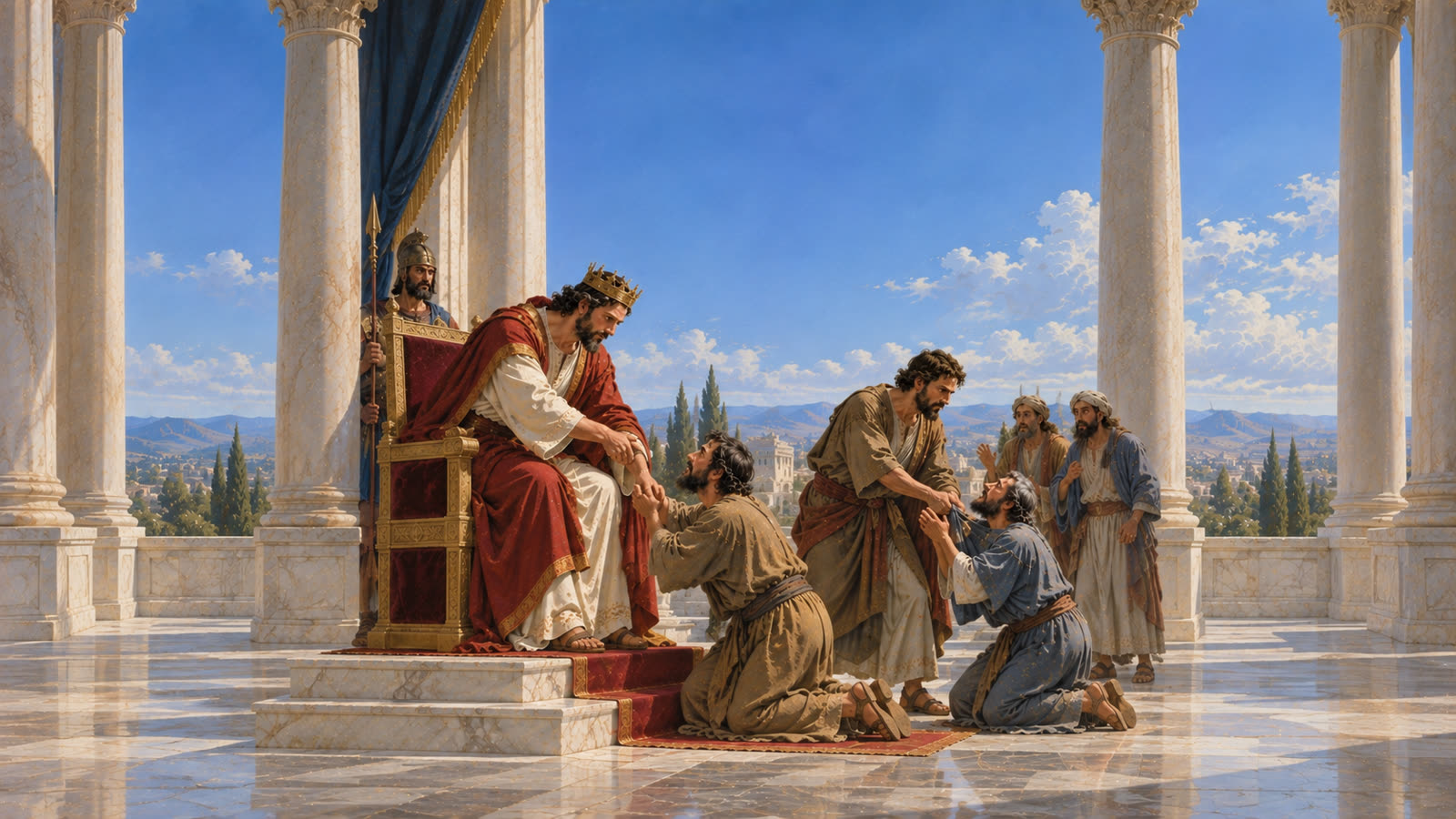
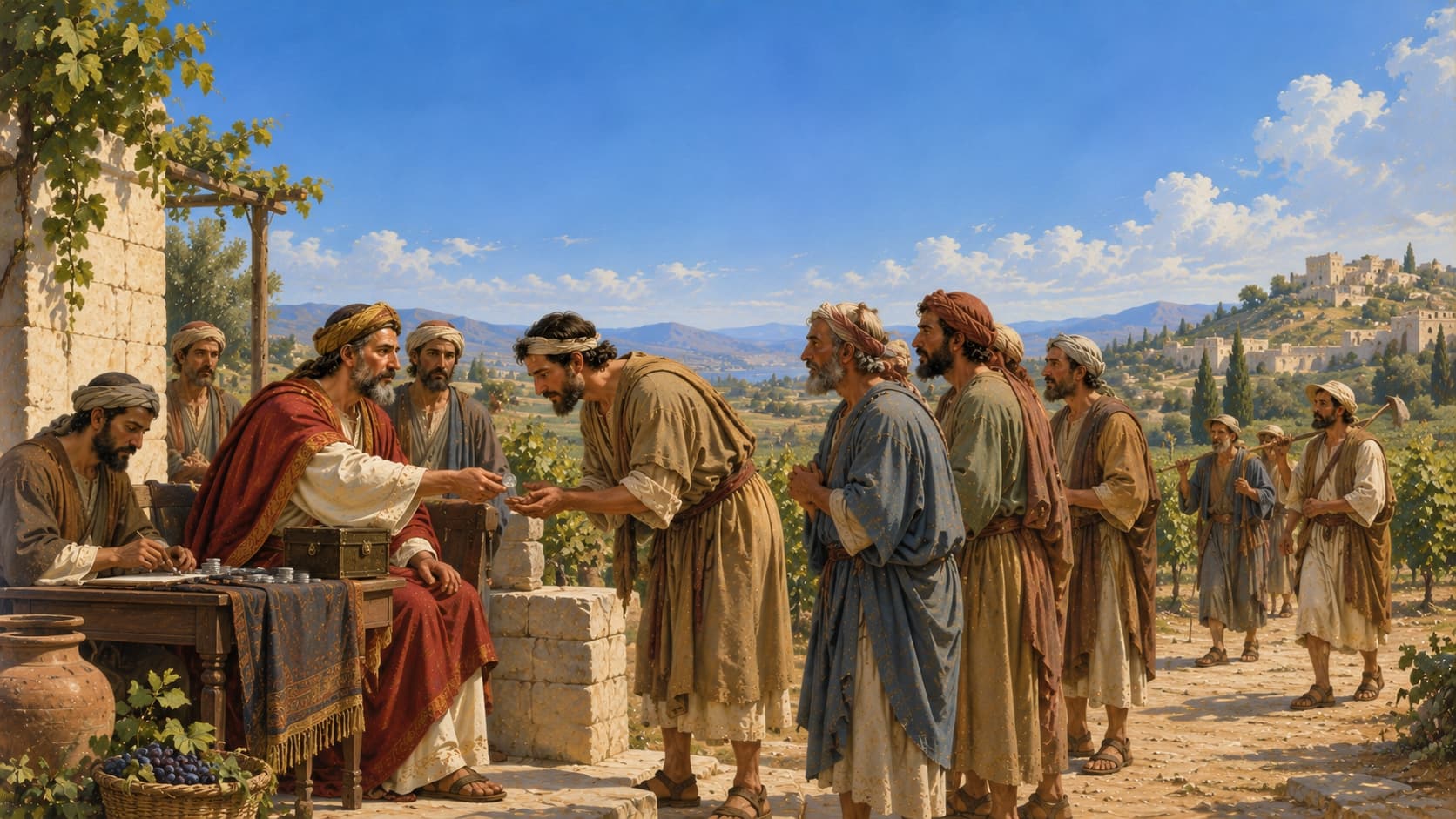
On this Twenty-sixth Sunday in Ordinary Time, the Gospel (Mt 21:28-32) presents the parable of the two sons. The father asks both of them to work in the vineyard. The first answers “I will not“, but afterwards changes his mind and goes. The second answers “Yes, sir“, but does not go. And Jesus asks: “Which of the two did his father’s will?” (Mt 21:31).
It is one more call to conversion. Jesus is speaking to the chief priests and the elders of the people, and the Gospel ends with a strong sentence: “Yet even when you saw that, you did not later change your minds and believe him” (Mt 21:32). When Jesus says that tax collectors and prostitutes are entering the Kingdom of God before us, the question comes back to us: could it be that we think too highly of ourselves? Even when He is harsh, Jesus is harsh in order to convert, never to condemn or to push away. And the more we pray, the more aware we should be of our weakness and of our need for conversion. As always, we have chosen five points for your meditation and prayer, which we share in the podcast: https://youtu.be/x88PbSVA320 (with subtitles in your language).
1. “What is your opinion? A man had two sons”
“What is your opinion? A man had two sons” (Mt 21:28).
It helps to place today’s Gospel in context. Last Sunday we were in chapter 20, with the laborers in the vineyard (cf. Mt 20:1-16a). Chapter 21 begins with Jesus’ entry into Jerusalem (cf. Mt 21:1-11); then Jesus drives the merchants out of the Temple (cf. Mt 21:12-13), leaves the city, and the episode of the fig tree takes place (cf. Mt 21:18-22). When He returns to the Temple, the chief priests and the elders question by what authority He had done this, and Jesus answers with another question: “Where was John’s baptism from? Was it of heavenly or of human origin?” (Mt 21:25). They discussed it among themselves, were afraid of the crowd, and preferred not to commit themselves: “We do not know” (Mt 21:25-27). It is in this context that Jesus begins: “What is your opinion?” We can hear an almost friendly tone here, as if to say: well then, let me tell you a little story. And with this question, Jesus invites them to judge the situation and, without realizing it, their own conduct.
The daily liturgy is very good and practical, but we need to know the Bible and pray with it, in order to know where the Gospel comes from and where it is going. Jesus was already speaking about John and will end by speaking about John: none of this comes out of nowhere.
The two sons immediately bring to mind the two sons in the parable of the merciful Father (cf. Lk 15:11-32). Here Jesus does not say which is the older and which is the younger; He only says “the first” and “the other”. A patristic reading sees in these two sons the Gentiles and the people of Israel; some Fathers even reverse the order of the first and the second. And the vineyard was already an image of the people of Israel in the Old Testament (cf. Is 5:1-7). In the New Testament, Jesus Himself presents Himself as “the true vine”, and the Father as the vine grower (cf. Jn 15:1ff.); and the vineyard also comes to speak of the Kingdom of God. Last Sunday, the laborers in the vineyard; today, the sons called to the vineyard; next Sunday, the tenants. We are laborers in the vineyard of the Kingdom: “The harvest is abundant but the laborers are few” (Mt 9:37).
All of us can find ourselves in this image. No one is always the first son, nor always the second: we have something of both, just as we have something of the son who asked for his share of the inheritance and of the older brother who stayed outside grumbling (cf. Lk 15:12, 28-30). The great danger is to place ourselves like the Pharisee who, standing up, gives thanks that he is not like that other man (cf. Lk 18:11). Be careful: you may be that other man. It is always important to pray like the tax collector: “O God, be merciful to me a sinner” (Lk 18:13).
2. “I will not”, but afterwards changed his mind and went
“He said in reply, ‘I will not,’ but afterwards changed his mind and went” (Mt 21:29).
“Changed his mind” is the Lectionary translation; other translations say “repented“. In Greek, it is the same verb that Jesus uses at the end, “you did not later change your minds” (Mt 21:32): metamélomai, to repent, to change one’s mind. It is a close relative of another word the New Testament uses for conversion, metanoia, which can also be translated as transformation, a change of mentality. Something happened inside this son. Jesus speaks of the need for conversion from the beginning to the end of the Gospel, and John the Baptist was already preaching it (cf. Mt 3:2).
There is a light here on the union of our will with the will of God. Saint Teresa of Avila speaks of it in the Fifth Mansions of her book “The Interior Castle”. The union of the will does not mean that I stop feeling my own will: it means that, knowing what God’s will is, I want to do it, whether I like it or not, whether it is easy or difficult. Often God’s will presents itself as a great challenge, and our flesh rejects it. This son shows something like that: his mouth said no, but his action said something else.
The text does not say how long afterwards he repented. He must have had some time to think. And what leads us to change our minds and be converted? We can recall at least four paths.
The first is the word, the argument, the preaching. Peter says “You will never wash my feet“, and Jesus answers him: “Unless I wash you, you will have no inheritance with me“. Peter then says: “Master, then not only my feet, but my hands and head as well” (Jn 13:8-9). Saint Paul asks: “And how can they believe in him of whom they have not heard? And how can they hear without someone to preach?” (Rom 10:14).
The second is tribulation. God sent Jonah to preach in Nineveh, and he fled in the opposite direction (cf. Jon 1:1-3). Then came the storm and the great fish, where Jonah spent three days and three nights (cf. Jon 2:1), and he ended up going (cf. Jon 3:1-3). Sometimes tribulations make us come to our senses and lead us to do the will of God.
The third is an experience of God. That is how it was with so many Saints: Saint Teresa of Avila, Saint Ignatius of Loyola, Saint Francis of Assisi before the San Damiano crucifix.
The fourth is the touch of grace. Saint Augustine, after so much resistance, felt this touch and decided: it is now, it is today (cf. Confessions VIII, 12). Saint Thérèse tells of something similar on Christmas night in 1886. Everything was set for her, once again, to cry and make a scene on hearing a tired remark from her father. But she decided differently: she dried her tears, went downstairs, and went to bring joy to her father and her sisters. She did not immediately start to like it, but she was stronger than herself, welcomed grace, and matured in a few minutes (cf. Manuscript A, 44v-45r). And perhaps you too have experienced conversion along one of these paths. Saint Thérèse also has a line, in a poem from 1897, that seems strange at first sight: “I always do my own will” (Poem 45, “My Joy”). She explains in the same poem that her joy is to want the will of Jesus. Since her will was united to God’s, doing God’s will was doing her own.
3. “Yes, sir”, but did not go
“The man came to the other son and gave the same order. He said in reply, ‘Yes, sir,’ but did not go” (Mt 21:30).
In this “Yes, sir” that is never fulfilled, we recall the words of Jesus: “Not everyone who says to me, ‘Lord, Lord,’ will enter the kingdom of heaven, but only the one who does the will of my Father in heaven” (Mt 7:21). And right after: “Lord, Lord, did we not prophesy in your name? Did we not drive out demons in your name?” And He will answer: “I never knew you” (Mt 7:22-23). Words are not enough. Saint John says: “Children, let us love not in word or speech but in deed and truth” (1 Jn 3:18). And Saint James: “Be doers of the word and not hearers only” (Jas 1:22).
As the popular saying goes: words persuade, but examples draw people along. The one who lived this coherence most fully was Jesus Himself. No one could accuse Him of sin (cf. Jn 8:46): He spoke and He gave the example. At the Last Supper, He washed the disciples’ feet and said: “If you understand this, blessed are you if you do it” (Jn 13:17). It is one thing to pay lip service; it is another thing to do the will of the Father. And even someone who speaks little, but acts, makes all the difference. Saint Teresa of Calcutta was not a preacher; we know few of her speeches, and look how she did the will of God. Each one has his own mission and his own calling, but idle talk is a danger. Here it is worth bringing the question into our own Lectio: am I only saying “Lord, Lord“, and not doing the will of God?
Jesus will also say to the scribes and Pharisees that they preached but did not practice (cf. Mt 23:3). Here He does not call them hypocrites: He denounces the lack of conversion. “It is not what enters one’s mouth that defiles that person; but what comes out of the mouth is what defiles one“, because it comes from the heart (Mt 15:11, 18). The prophets already said: “This people honors me with their lips, but their hearts are far from me” (Is 29:13; cf. Mt 15:8). And, as in Luke 15, where the three parables of mercy begin by saying that the tax collectors and sinners were drawing near to listen to Jesus (cf. Lk 15:1), here Jesus says that they are going ahead. They are aware of their own sin and know that they do not deserve the Kingdom. The problem is when we think we deserve it and put ourselves above others. What good is it for me to preach and speak, if I do not do the will of God?
The Virgin Mary is the opposite example of the second son. She said: “Behold, I am the handmaid of the Lord. May it be done to me according to your word” (Lk 1:38), and she immediately set out in haste to serve her relative Elizabeth (cf. Lk 1:39). When a woman calls blessed the womb that carried Him, Jesus replies: “Rather, blessed are those who hear the word of God and observe it” (Lk 11:28). It is the name of our channel, and what completes it is precisely putting the Word into practice.
4. “Which of the two did his father’s will?”
“Which of the two did his father’s will?” They answered, “The first” (Mt 21:31).
This is the main question: doing the will of the Father. Those who answer are not Pharisees, but chief priests and elders. The Sanhedrin brought together Sadducees and Pharisees, and the two groups thought very differently, for example, about the resurrection (cf. Acts 23:6-8). Now they answer the question from the beginning, “What is your opinion?“, and fall right into what Jesus expected: “The first“. You are absolutely right. And Jesus concludes: “Amen, I say to you, tax collectors and prostitutes are entering the kingdom of God before you” (Mt 21:31). They did not want to say whether John’s baptism was of heavenly or of human origin (cf. Mt 21:25-27); now they themselves have said that what counts is the one who does, not the one who talks. We can read in that “We do not know” a refusal to commit themselves, which deep down is also a refusal to believe and to be converted.
It is the same pedagogy as other questions of Jesus. To Simon the Pharisee, who had received Him in his house, He asks which of the two debtors will love more, and Simon answers: “The one, I suppose, whose larger debt was forgiven” (Lk 7:43). The sinful woman “has shown great love” because much had been forgiven her (cf. Lk 7:47). To the scholar of the law, after the parable of the good Samaritan, Jesus asks who was neighbor to the man who fell into the hands of robbers; he answers: “The one who treated him with mercy“. And Jesus says: “Go and do likewise” (Lk 10:36-37). It is not enough to see and pass by; it is concrete love.
“Love is the fulfillment of the law” (Rom 13:10), and “love covers a multitude of sins” (1 Pt 4:8). Whoever says he keeps the Law, but does not love, is not keeping the Law. We see many people on the internet laying down rule after rule, as if rules were going to save anyone: “A real Catholic doesn’t do this, doesn’t do that.” What I do or fail to do will be a reflection of what is inside me; but if I do not have love, it is worth nothing (cf. 1 Cor 13:1-3). Conversion comes from the inside out; if it is not like that, it is empty. That is why Jesus asks us to forgive “from your heart” (Mt 18:35).
And I can only place my own sin before God, because I do not know the heart of another. We pray with the Psalm: “For I know my transgressions; my sin is always before me. Against you, you alone have I sinned” (Ps 51:5-6). Saint Teresa teaches that “humility is walking in truth” (cf. Interior Castle, Sixth Mansions 10:7). This phrase is often misinterpreted, as if the truth were my diploma or my titles. The truth is that I am a sinner, I do not deserve God’s mercy, and God is merciful. Humility is not self-deprecation: it is recognizing my place. Saint Teresa herself, when describing the vision of the place that had been prepared for her in hell, writes that this was “one of the greatest favors the Lord granted me” (The Book of Her Life 32:4), because there she understood what God’s mercy had freed her from. She had ecstasies and so many extraordinary graces, but she counted this among the greatest. And Saint John of the Cross warns that whoever takes pride in spiritual consolations is in great danger (cf. The Dark Night I, 2): the grace of God makes us more humble.
5. “You did not later change your minds and believe him”
“Yet even when you saw that, you did not later change your minds and believe him” (Mt 21:32).
It is this last verse that stands out: repentance is for the sake of faith. When we are converted, it is in order to believe in Jesus Christ. The Gospel of Saint John also ends with this question of faith: the signs were written “that you may (come to) believe that Jesus is the Messiah, the Son of God, and that through this belief you may have life in his name” (Jn 20:31).
The chief priests and the elders did not believe, despite having seen so many signs. And now there was one more powerful sign: the conversion of the tax collectors and the prostitutes. Even seeing this conversion, they were not converted, and they always found a thousand reasons not to believe. When the crowds went out to John the Baptist, the tax collectors asked: “Teacher, what should we do?” And John answered: “Stop collecting more than what is prescribed” (Lk 3:12-13). They remained tax collectors, but converted. These are the ones who, Jesus says, are going ahead into the Kingdom. And those who were listening to Jesus remained hardhearted.
Before hardness of heart, our own or that of people we love, there are things only prayer can resolve. It is not we who will overcome the hardness of anyone’s heart; if it is not God Himself, who will it be? Here we can ask for the intercession of Saint Monica, who persevered for years in prayer for the conversion of her son Augustine: asking, seeking, knocking, and insisting, because the Father “will give the holy Spirit to those who ask him” (Lk 11:13). What father among you would hand his son a snake when he asks for a fish? (Lk 11:11). The greatest grace is to ask for the Holy Spirit, because the Spirit transforms even our requests: what we think is best, God changes into what is His will and what is truly best for us (cf. Rom 8:26-27).
Steps of Lectio Divina
Lectio Divina is the prayerful reading of the Word of God. Set aside a time of silence, call upon the Holy Spirit, and calmly go through these steps, praying with this Gospel yourself.
1. Reading (Lectio). What does the text say?
Gospel (Mt 21:28-32)
“Jesus said to the chief priests and elders of the people: “What is your opinion? A man had two sons. He came to the first and said, ‘Son, go out and work in the vineyard today.’ He said in reply, ‘I will not,’ but afterwards changed his mind and went. The man came to the other son and gave the same order. He said in reply, ‘Yes, sir,’ but did not go. Which of the two did his father’s will?” They answered, “The first.” Jesus said to them, “Amen, I say to you, tax collectors and prostitutes are entering the kingdom of God before you. When John came to you in the way of righteousness, you did not believe him; but tax collectors and prostitutes did. Yet even when you saw that, you did not later change your minds and believe him.””
2. Meditation (Meditatio). What does the text say to me?
At what moments am I the first son, who says no and then goes? And at which am I the second, who says “Yes, sir” and does not go? By which path has the Lord already converted me: a word, a tribulation, an experience of God, a touch of grace?
3. Prayer (Oratio). What do I say to God in response to the text?
“Lord, today we ask You for this grace: even if our words, our outward selves, or our feelings reject Your will, give us the strength to do Your will. Give us the grace to recognize how little we deserve Your mercy and how merciful You are toward us. Show us, Jesus, how much You love us, how compassionate You are, and how much forgiveness You have for us, so that we too, filled with Your love, Your compassion, and Your forgiveness, may love, forgive, follow You, and live in Your love. Give us the grace not to look at ourselves with self-deprecation, but in truth: we deserve nothing, and we are loved, cherished, and precious because of Your love. Mary, hold our hand, lead us on the path of truth, and help us to do the will of God…”. Continue your prayer, moved by the Holy Spirit.
4. Contemplation (Contemplatio). What new way of seeing does God give me?
Remain in silence before the Father who asks both sons, with the same patience, to go and work in his vineyard. Let Him look upon your “no” that later repents and your “yes” that was never fulfilled, and let His mercy change your heart.
5. Action (Actio). What is the Lord calling me to today?
Choose one thing you have already told the Lord you would do and have not yet done, and carry it out this week. And pray every day for someone who is hardhearted, asking the Holy Spirit for that person.
See you next week!
Shalom!
From Monday to Saturday, we have a short video; on Sunday, our podcast with the Sunday Gospel for you to meditate on and pray with. Subscribe to the channel and invite others, so that more people may love the Word of God. Leave your “like” and share it with your friends. God bless you. Shalom!
Podcast video: https://youtu.be/x88PbSVA320 with subtitles you can select in your language.