José Ricardo Bezerra and Felipe Bezerra
This Sunday we celebrate the Solemnity of Saints Peter and Paul, Apostles. Although the calendar marks the Thirteenth Sunday in Ordinary Time, in Brazil we follow the liturgy of the CNBB, which transfers to this Sunday, the nearest to the 29th, the feast of the two great apostles. In some places the solemnity is celebrated on June 29 itself.
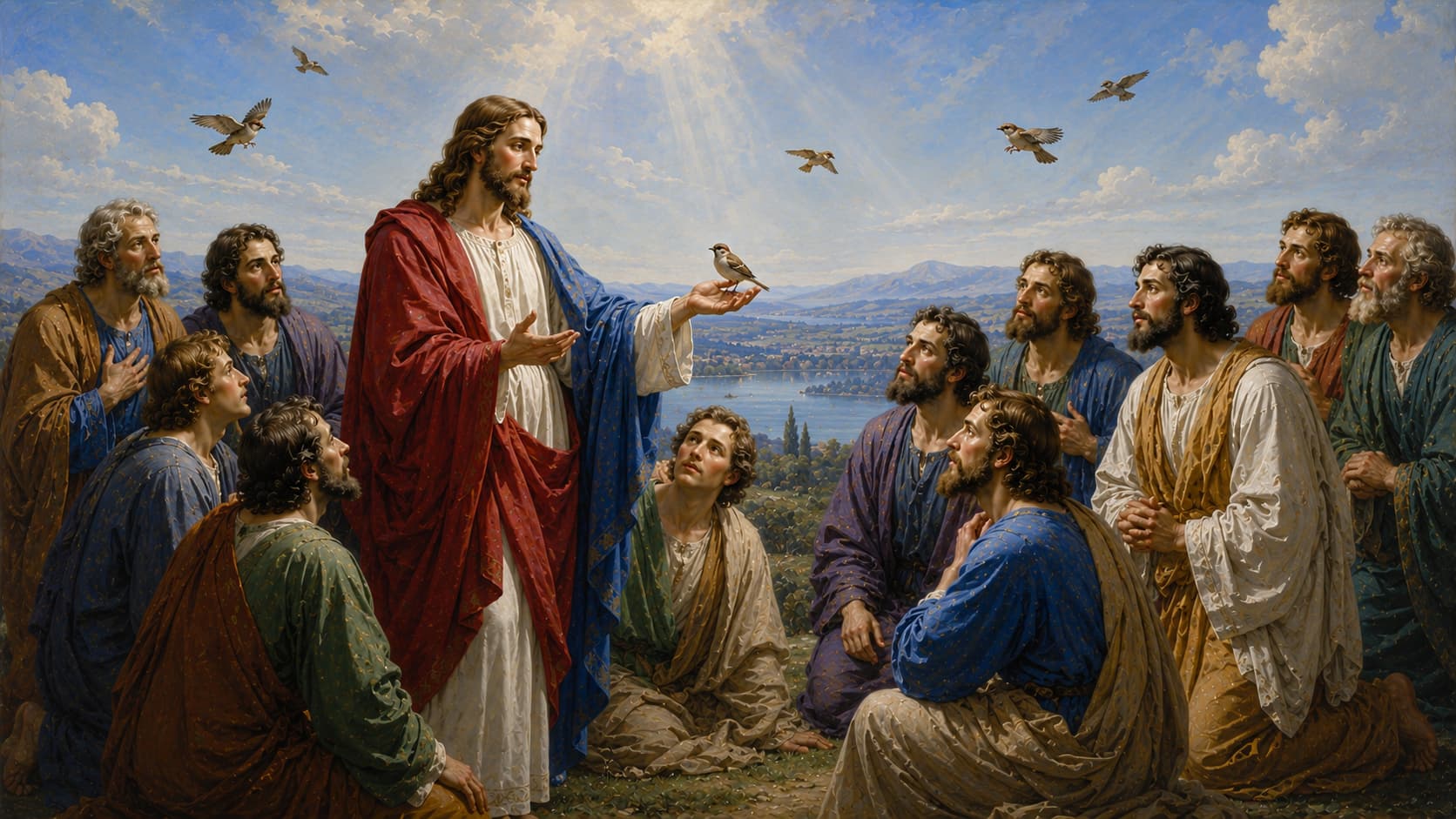
The liturgy offers us two Gospels, that of the vigil (John 21:15-19) and that of the day (Matthew 16:13-19), which we chose for our meditation. It is the text in which Jesus asks the disciples who people say He is, and Peter answers in the name of all; Jesus then makes him the foundation stone of His Church. The focus of the Gospel is on Peter, but today’s feast also celebrates Paul, the great apostle and evangelizer of the Church.
This passage has six verses, and we chose five points for our meditation. Perhaps you have already read and heard this Gospel many times, but when we take up the Word to pray, the Lord always surprises us with something new. Watch the full podcast episode on our channel, with subtitles in your language.
The Gospel
Jesus went into the region of Caesarea Philippi and he asked his disciples, “Who do people say that the Son of Man is?” They replied, “Some say John the Baptist, others Elijah, still others Jeremiah or one of the prophets.” He said to them, “But who do you say that I am?” Simon Peter said in reply, “You are the Messiah, the Son of the living God.” Jesus said to him in reply, “Blessed are you, Simon son of Jonah. For flesh and blood has not revealed this to you, but my heavenly Father. And so I say to you, you are Peter, and upon this rock I will build my church, and the gates of the netherworld shall not prevail against it. I will give you the keys to the kingdom of heaven. Whatever you bind on earth shall be bound in heaven; and whatever you loose on earth shall be loosed in heaven.” (Mt 16:13-19).
1. “Who do people say that the Son of Man is?” (Mt 16:13)
Jesus’ first question is not an opinion poll. He does not want to know his popularity, but wants the disciples to perceive who He really is. It is the question of Jesus’ identity. The answers come at once: John the Baptist, Elijah, Jeremiah, or one of the prophets. Jesus is none of them, although He had some traits of those mentioned, which we do not go into in the podcast.
This question of the Lord to the apostles crosses the two thousand years of history. What have people already said about who Jesus was? Many acknowledge Him as a good and holy person but deny that He is the Son of God. Others call Him a philosopher, an unequalled master, a man who did many good things, who healed and even raised the dead, but refuse to accept His divinity. There are all possible versions, and there were many heresies about Jesus from the beginning of Christianity until today.
Knowing what is said about Jesus even helps us understand who He is not. It is the so-called theology of negation (apophatic), the way of saying what God is not. Following the history of the heresies, we come to understand: Jesus is not merely a man (against Arianism), He is not an exalted angel, He is not a special creature, He is not a demigod. It was to preserve this truth that the Church proclaimed the dogma of Mary, Mother of God (Theotokos), at the Council of Ephesus (431): to call Mary Mother of God does not mean she is a goddess, but that She is the mother of the one single person who is Jesus, true God and true man, who cannot be divided into two persons.
The Niceno-Constantinopolitan Creed, fruit of the Councils of Nicaea (325 A.D.) and Constantinople (381 A.D.), reached a luminous conclusion about Jesus: “God from God, light from light, true God from true God, begotten, not made, consubstantial with the Father.” These truths were not invented by the Councils. They were already in the Gospels. For example, Saint Mark opens by saying it is the “Gospel of Jesus Christ, the Son of God,” and Saint John concludes his by testifying that he wrote those signs “that you may believe that Jesus is the Son of God and, believing, may have life in him” (Jn 20:31). The dogmas only make explicit, when someone denies it, what was always the faith of the Church.
2. “But who do you say that I am?” (Mt 16:15)
This is the great question, because the answer is unique and individual. Before the Lord, each one answers who He is for him. Peter takes the floor in the name of the other apostles, but each heart has its own answer. That of Thomas, when invited to touch the wounds of the Lord, declares: “My Lord and my God.” (Jn 20:28).
Here we can take a step further, following the spirit of Saint Francis of Assisi when he prayed before the Byzantine crucifix of San Damiano: “Who are you, Lord, and who am I?” Or, as Saint Teresa of Ávila prayed: “Lord, you are the one who is, and I am the one who is not.” The experience with the Lord leads us to Job’s realization: “I had heard of you only by word of mouth, but now my eyes have seen you.” (Jb 42:5). We do not see with the eyes of the body, but we see with the eyes of faith, and faith is the foundation of the whole Christian life.
This answer, which the Lord desires from each one, cannot be hijacked by any ideology. It is useless to try to make Jesus a man of the “left” or of the “right,” to call Him the first socialist or the defender of traditional values and individual moral responsibility. The Social Doctrine of the Church is far above any political ideology. The Catholic answer remains the same: “God from God, light from light, true God from true God…” This is what Peter will confess in a simple way, as we shall see next.
3. “Blessed are you…” (Mt 16:17)
After Peter proclaims that Jesus is the Messiah, the Son of the living God, the Lord declares him happy, blessed, because “flesh and blood has not revealed this to you, but my Father who is in heaven” (Mt 16:17). Peter’s happiness is born of this revelation of the Father. And there is here an implicit affirmation of the Trinity: it is the Father who reveals, and it will also be the Spirit who makes us know who Jesus is (cf. Jn 14:26; 15:26).
In your prayer, put your own name in place of Peter’s name: “Blessed are you, (your name).” We too can live this beatitude every time we recognize and praise the Lord, because He reveals himself. And when it is the Father, or the Spirit himself, who reveals to us who Jesus is, we share in the same happiness of Peter. These things, says the Lord, are hidden from the wise and learned and revealed to the little ones (cf. Mt 11:25).
Therefore, cry out: “Come, O Father, and reveal to me who Jesus is. Come, Holy Spirit, and reveal to me who Jesus is.” It is not our intelligence, nor any human being, that can reveal this. As Pope Benedict XVI taught (cf. General Audience of November 14, 2012, and Deus Caritas Est, 1), the Christian faith is not a series of doctrines, but the encounter with a Person. It is no use knowing everything about religion if the experience with the person of Jesus is still lacking. Whoever has had that experience does not give up, like the dog that saw the rabbit and keeps running when the others have already tired, because he knows what he saw. Do not stop halfway: ask, because the Spirit comes to the aid of our weakness (cf. Rom 8:26).
4. “The power of hell” (Mt 16:18)
“You are Peter, and upon this rock I will build my Church, and the power of hell will never be able to overcome it.” (Mt 16:18). Why does Jesus allow the power of hell to keep acting? Because there our freedom comes in. Hell has power, yes, but it is a limited power: it can never conquer the Lord or the Church. As in a phrase attributed to Saint Augustine: the devil is the chained dog that only bites whoever comes near it. The devil exists, and so does hell, and its power wants to draw us away from God and cast us onto the path of darkness, but it cannot take away our intelligence or our will.
God willed to create us free. Already the book of Deuteronomy said: “See, I set before you life and death.” (Dt 30:19). It is the doctrine of the two ways, of Psalm 1, of the narrow gate and the wide gate (cf. Mt 7:13-14). The power of hell may try to draw us away from the Lord, and there is even the weight of communal sin, when the group drags us along, but no one is forced to sin. That is why we pray in the Our Father: “Lead us not into temptation.” (Mt 6:13). And Saint Paul, in the Letter to the Ephesians (Eph 6:10-17), reminds us to put on the armor of God for the spiritual combat.
It is worth noting the image of the “gates of hell” (Mt 16:18), the term used in some translations. A gate does not leave its place to attack. If the “gates of hell shall not prevail,” it is because it is we, the Church, who advance against them. As in a medieval siege, the goal is to bring down the castle gate and free those inside. The Church exists to go in search of the lost sheep wherever it is, trench by trench, until winning all peoples for God. It is not about staying crouched and quiet, but about advancing, proclaiming the Gospel to every creature, with parrhesia, with boldness.
Finally, the two great powers of hell over man were always sin and death, and both were conquered by Jesus. He conquered death and sin, and we are victors with Him (cf. Rom 8:37; 1 Cor 15:57). As long as we are in this life we will still face temptations, but the victory is already assured. It is like holding a winning ticket that will only be received later on: the struggle continues, but with the certainty of the prize that already belongs to us. “Take courage, I have conquered the world” (Jn 16:33), said Jesus at the Last Supper. What we need is to get there, firm and secure in the barque of Peter.
5. The power of the keys (cf. Mt 16:19)
“I will give you the keys of the Kingdom, and whatever you bind on earth will be bound in heaven, and whatever you loose on earth will be loosed in heaven.” (Mt 16:19). Jesus had already given the disciples power over evil spirits, over diseases, and to preach the Good News of salvation. But the power of the keys is given specifically to Peter, and the pronoun is in the singular: “I will give you (singular),” and not “I will give you (plural).” The power to heal and even to absolve sins (cf. Jn 20:23) are given in the plural, but the promise of the keys was to one alone, to Peter. It is one more reason to recognize in him and in his successors his unique and supreme authority.
That is why, when the bishops gather in Council, they deliberate, but it is the Pope who gives the final word: without his ratification, the conciliar Acts have no value, precisely because of the power of the keys, which belongs to Peter and his successors. The Church cannot divide itself into a thousand voices where each says what he wants. If in heaven there is a hierarchy, saints, angels, and archangels, why would there not be one on earth? A final word of authority is needed, and it was Jesus himself who constituted it in Peter.
This image of the keys comes from far back in the history of Israel. In the time of the kings, there was the palace steward (in Hebrew, “Ha-bayit,” the one who is over the house). When the king went out to war, he left the key with him: it was he who opened and closed, who commanded in his name. The prophet Isaiah recounts the case of Eliakim, who receives the investiture and the keys of the house of David (cf. Is 22:20-22). Jesus takes up again in the Church something deeply historical to Israel. Another element of that dynasty is the queen mother (in Hebrew, Gebirah): since Solomon, the queen was not the wife, but the mother of the king, as we read in the Book of Kings (cf. 1 Kgs 2:19-20; 14:21; 15:2). That is why we call Our Lady Queen: because the Queen of the Kingdom of Israel was the mother of the king, and Jesus made a point of all this.
A detail about the name of Peter
It is worth observing the evolution of the apostle’s name. First he is “Simon, son of Jonah” (Jn 1:42; Mt 16:17). After being called by Jesus, no one calls him Simon anymore, except the Lord himself, in the appearance by the Sea of Galilee: “Simon, son of John, do you love me?” (Jn 21:15-17). Over time, as we see in Paul’s Letters, he is called only “Cephas” (1 Cor 1:12; 15:5; Gal 2:11-14), the Hebrew name Jesus gave him, which no one dares to translate. This maturing shows that already in apostolic times the primacy of Peter was recognized and, even more, the authority of Jesus, who gave him a new name and a new mission. That is why we cannot say that Peter was simply like the others.
When Saint Paul recounts that he argued with Peter (cf. Gal 2:11-14), he is not diminishing him. On the contrary: he is saying that he called out even the one who was above all, precisely to show that he was not soft, and that on that occasion Peter deserved it. But Paul acknowledged Peter as a pillar of the Church and the importance of his mission (Gal 2:7-9).
A word about Saint Paul
As today’s feast also celebrates Saint Paul, it is worth recalling his formation. After the very powerful experience on the way to Damascus, Paul did not go out preaching the next day. He had his sight healed (cf. Acts 9:17-19), spent years maturing (cf. Gal 1:15-18; 2:1), and it was still necessary for Barnabas to bring him among the apostles (cf. Acts 9:26-27) and, years later, to go to Tarsus to take him to Antioch (cf. Acts 11:25-26). Today there are many “internet converts” who, recently baptized, think they already have the authority to preach as Paul had. But Paul took years. As Bishop Robert Barron says, whoever wants to evangelize in the new media must first get used to the old media: one must read a lot, know the doctrine and the Word of God, before speaking, lest one end up talking nonsense.
The one Church of Christ
Jesus does not speak of “my churches,” but of “my Church” (Mt 16:18), in the singular. It is the one Church of Christ, one, holy, catholic, and apostolic, founded on Peter and his successors, from Peter to Pope Leo XIV. As the Fathers of the Church said, such as Saint Ambrose: “where Peter is, there is the Church”; and also Saint Augustine: “Rome has spoken, the case is closed.” Curiously, it was Saint Irenaeus himself who named the authors of the four Gospels, which we know through Tradition and not in the very texts of the evangelists. Whoever accepts the canonicity and the names of the four Gospels because of the Fathers of the Church must, for consistency, also accept the primacy of Peter, affirmed by the same Tradition.
Steps of the Lectio Divina
Reading (Lectio). What does the text say?
Read calmly, in a low voice, the text of the Gospel of Matthew 16:13-19 that we placed above. Or, if you wish, meditate on the vigil Gospel, John 21:15-19.
Meditation (Meditatio). What does the text say to me?
Let the Word resound from the five points: what people say about Jesus; what you yourself answer to the question “who do you say that I am?”; the happiness of the one who receives the revelation of the Father; the limited power of hell before the victory of Christ; and the power of the keys entrusted to Peter and his successors. Ask yourself: have I already had a personal experience with the person of Jesus, or do I only know things about Him?
Prayer (Oratio). What do I answer to God from the text?
Pray in your own words, putting your name where Jesus says “Blessed are you…”. Cry out to the Father and the Holy Spirit: “Come and reveal to me who Jesus is.” Pray for the Church, for the Pope, for your bishop, and for your Community or parish, and entrust yourself to the intercession of Our Lady, Queen and Mother.
Contemplation (Contemplatio). What new gaze does God give me?
Remain in silence before the Lord, like Saint Francis before the crucifix: “Who are you, Lord, and who am I?” Just stop and marvel before the person of Jesus, letting Him tell you, individually, that you are his beloved child.
Action (Actio). To what does the Lord call me to act today?
Take up a concrete gesture this week: to confess your faith in Jesus with your life, to pray for the Pope and for the unity of the Church, and to share with someone the joy of belonging to this one flock. Advance against the “gates of hell,” seeking the sheep that is far away.
Until next week. Shalom!
From Monday to Saturday we have a short video; on Sunday, our podcast with the Sunday Gospel for you to meditate and pray. Subscribe to the channel and invite others, so that more people may love the Word of God. Leave your “like” and forward it to your friends. God bless you. Shalom!
Podcast video: https://youtu.be/oQ1zYkweHAQ with subtitles you select in your own language